There is a fine line between a classic kitchen and one that looks as though Miss Havisham will pop round for tea.
Simple bones
Clean-framed doors and the right colour are doing more than you think.
Materials that age
Oak, brass and linen all look better with use. Buy for what they become, not what they are.
Things you actually use
The best kitchens leave things out because they earn their place, not because they've been styled.
The idea
Shaker kitchens have endured for a reason. The clean lines work almost anywhere, and they can feel English, Scandinavian, American or quietly contemporary depending on what you put around them. But somewhere between the painted cabinetry, Belfast sinks and carefully arranged chopping boards, a classic kitchen can quickly become a little too country. A little too themed. A little too twee.
The fix is not to strip everything back until it resembles a showroom. It is to think about what makes a kitchen feel good to be in. The mug you reach for every morning. The click of a switch. A salt cellar beside the hob. Linen at the window. It is about collecting good things and using them every day.
The details
01
Keep the bones simple
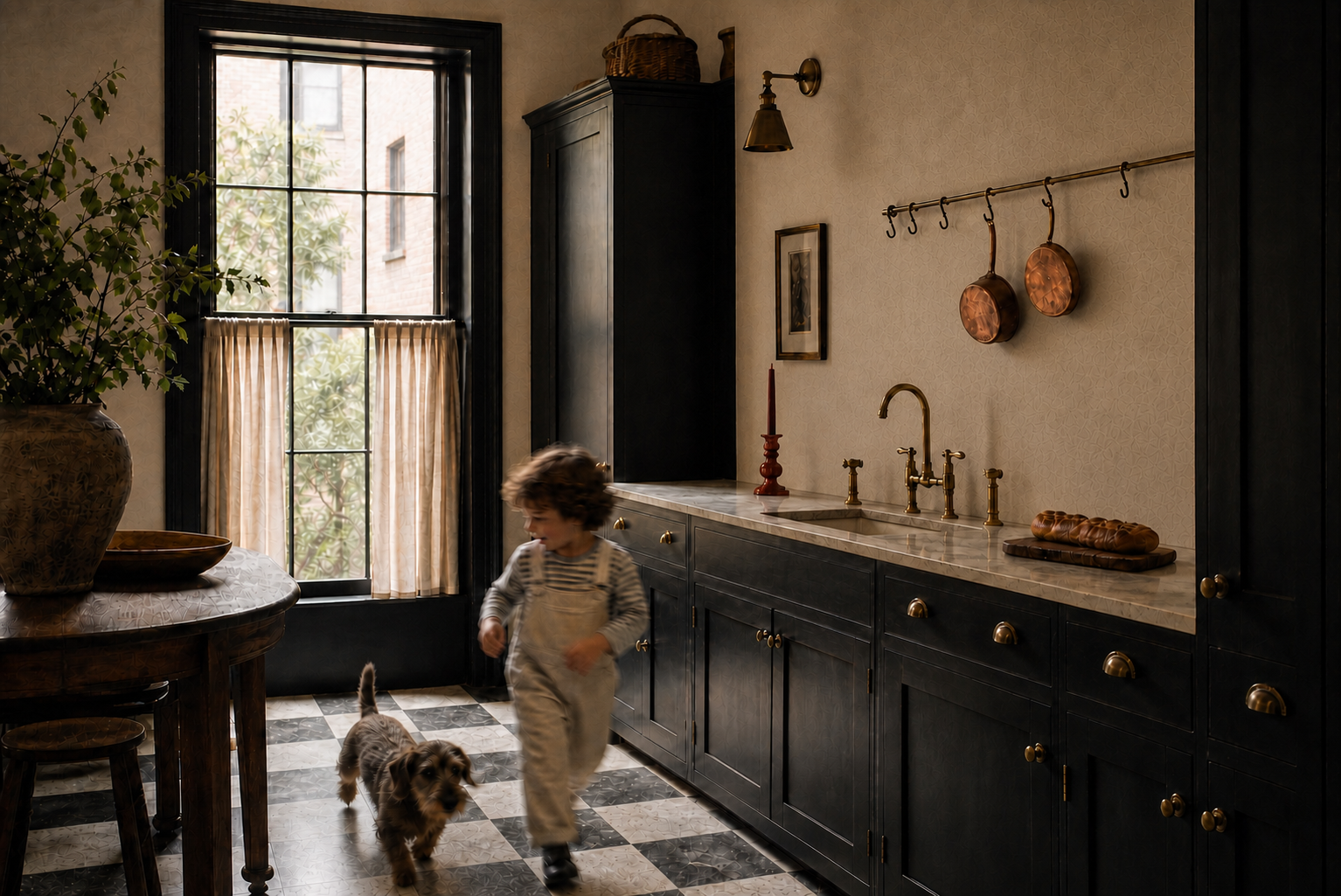
The beauty of a Shaker kitchen is its restraint. Clean-framed doors, good proportions, colours that will still feel right in ten years. Warm whites. Putty. Soft stone. Muddy greens. Greyed blues. The best neutral schemes have depth, change with the light and make everything around them — wood, brass, stone or ceramics — feel richer. Create a calm backdrop, then let the objects do the talking.
02
Choose things that get better with age
The quickest route to a timeless kitchen is to stop buying everything to match. Think about materials instead. Oak that picks up marks. Brass that changes over time. Linen that softens with washing. Ceramics with tiny imperfections. Stone with texture and weight. A good rule: if it will look better after five years of use, it is probably worth buying.
03
Start with the things your hands reach for
Rather than filling the worktop with decorative accessories, start with what you actually use. A proper salt cellar. A beautiful pepper mill. A ceramic bowl for garlic and lemons. A kettle worth leaving out. Mugs with a handle you genuinely enjoy holding. The best kitchens have things left out not because they have been styled, but because they are useful enough to earn their place. You don't need twenty objects. You need five or six that are useful, beautiful and feel good in your hand.
04
Don't underestimate a good handle
Hardware is one of those details you touch dozens of times a day, so it is worth getting right. For a classic look that does not feel traditional, think aged brass knobs, simple cup pulls or clean elongated bars. The same goes for taps and switches. Classic shapes, clean lines. A little warmth and patina, yes. Too much decorative detail and you have crossed into costume territory.
05
Add softness at the window
A kitchen is a collection of hard surfaces. Cabinets. Stone. Tile. Metal. This is where fabric earns its place. A simple café curtain in soft linen or a subtle stripe can be one of the most charming additions. Hang it from a slim brass pole and keep the proportions elegant. The result should feel more like an old European apartment than a themed cottage.
06
Use colour as an accent, not a theme
A tomato-red bowl. A deep olive vase. A faded blue glass. A striped linen tea towel. The colours do not need to match. The goal is the feeling that things have been collected over time. You do not need a red accessories moment. You need one beautiful red thing. That is how rooms start to feel personal.
07
Leave room for something living
Every kitchen needs something organic. An olive branch in an earthenware vase. A few cuttings from the garden. A bowl of lemons. A pot of basil you are genuinely trying to keep alive. A sculptural vase holding one or two branches can do more for a kitchen than an entire shelf of curated objects. And if the branches go a bit wonky after a week, even better.
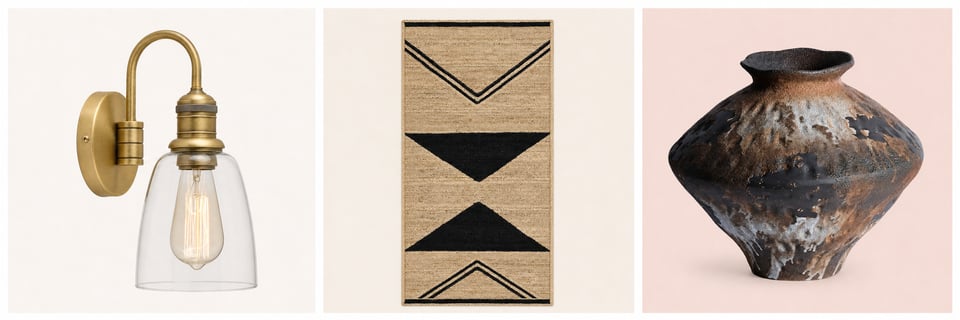
Get the look
The pieces worth reaching for. We've done the searching so you don't have to.
Shop the Shaker Kitchen Edit →Why it works
A Shaker kitchen lasts because it is defined by proportion and restraint, not by trend. Everything around it changes — the handles, the accessories, the colour on the wall — and the bones stay right. It is not a look. It is a framework for a kitchen that keeps getting better.
WHAT TO LEAVE OUT
Kitchen cosplay. Signs telling you where the pantry is. Faux-vintage advertising. Gingham on everything. Enamelware displayed as a collection. Jars labelled in matching handwriting. A kitchen should look like somewhere people cook, eat and occasionally put the shopping down. The aim is not perfection. It is atmosphere. Buy less. Choose better. Use it every day.
LIKE THIS?
Get The Edit in your inbox
Questions
What is a Shaker kitchen?
A kitchen built around clean-framed cabinet doors with a recessed centre panel, derived from Shaker furniture. The style is defined by restraint and proportion rather than decoration.
What colours suit a Shaker kitchen?
Warm whites, putty, soft stone, muddy greens and greyed blues. Choose colours with depth that shift with the light rather than flat modern neutrals.
What handles work best on Shaker cabinets?
Aged brass knobs, simple cup pulls or clean elongated bars. Anything with heavy decorative detail pushes the kitchen towards costume.
Are Shaker kitchens still in style?
They have been in style for two centuries, which is the strongest argument available. What dates is the styling around them, not the cabinetry.
How do you make a Shaker kitchen feel modern?
Keep the bones simple, use materials that age well, and treat colour as an accent rather than a theme. One beautiful red bowl, not a red accessories collection.
What worktop suits Shaker cabinetry?
Anything with texture and weight. Honed stone, timber or a good composite. High-gloss surfaces fight the softness of the cabinetry.