What would it take to actually sit down, switch off, and listen?
One good chair
The corner starts and ends with somewhere to spend an evening.
Warmth and texture
Timber, wool and linen stop a room feeling echoey. They also look right.
Low light
One warm lamp beside the chair. The ceiling light stays off.
The idea
The inspiration comes, in part, from Japan's ongaku kissa and jazz kissa music cafés, where listening was the point. Their influence can be felt in the new generation of listening bars appearing from London and New York to Berlin and Paris. But you don't need a bar, and you don't need a dedicated room. A corner of the sitting room, the end of a dining room, a spare bedroom, or that awkward space you've never known what to do with will do.
The best listening rooms are not the ones with the most expensive speakers. They are the ones that make you behave differently when you walk in.
The details
01
Start with somewhere to sit
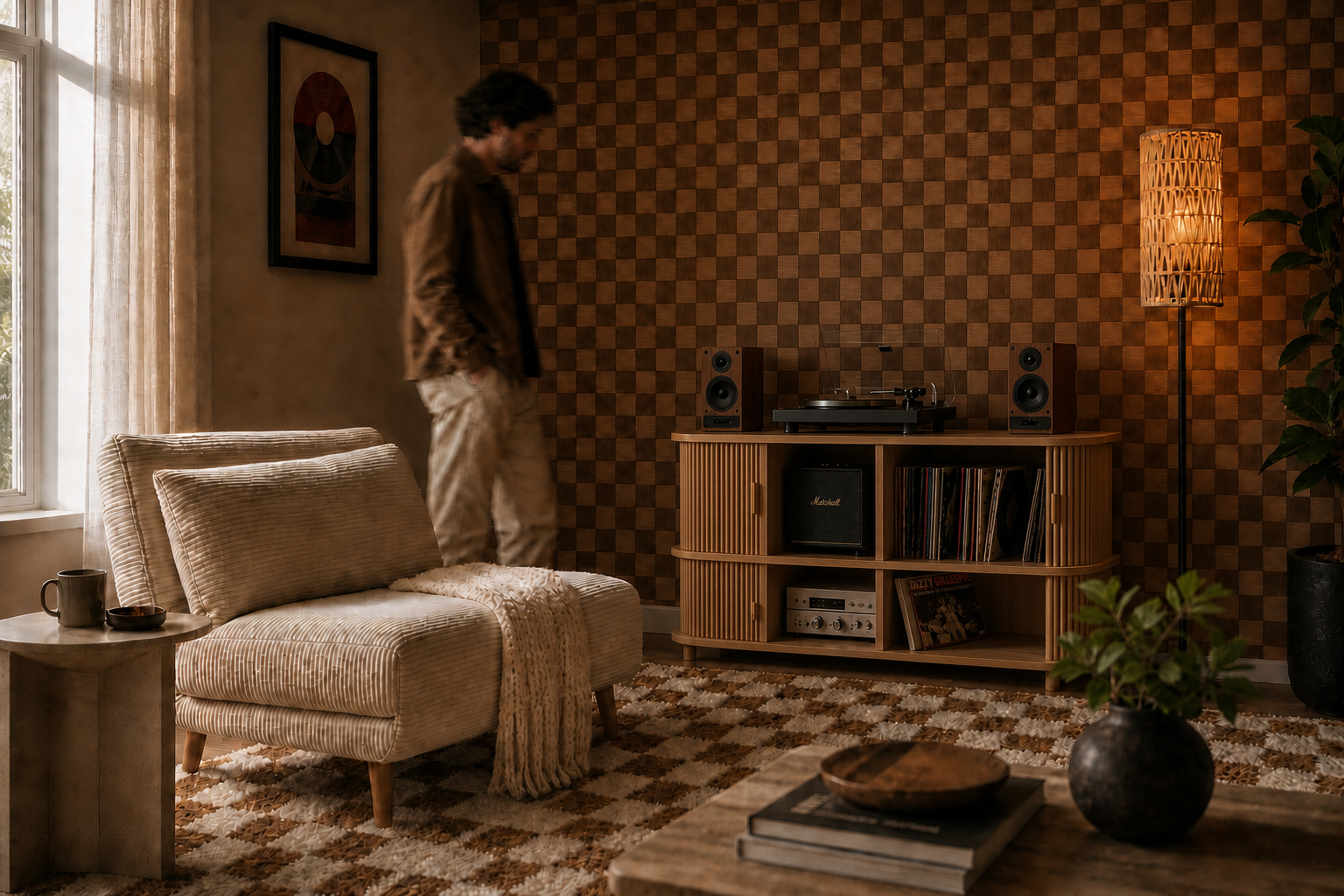
This is not the place for perching. A good listening corner starts with a chair you actually want to spend an evening in. A compact armchair, a small sofa or a well-chosen daybed creates an invitation to stop. Add a small side table for a drink, a book or the record sleeve currently in rotation, and the space suddenly has a purpose. Everything else gets positioned relative to this chair, so choose it first and buy equipment last.
02
Warmth and softness
The classic listening-room look favours tactile, layered materials: wood, wool, linen, leather and textured fabrics. Soft furnishings stop a room feeling echoey, while timber brings warmth and a sense of permanence. A rug underfoot. Curtains. Upholstery. Perhaps timber panelling behind the seating. This is not about turning your home into a recording studio. It is about a space that feels softer, warmer and more enveloping than the room it sits in.
03
Give the music somewhere to live
Vinyl lends itself to this look. There is something wonderfully architectural about a row of records: part storage, part display, part autobiography. A low unit can house the collection and hold the turntable, while shelves turn album covers into decoration. And if you don't own a single record, that doesn't disqualify you. Wireless speakers create the atmosphere without filling the room with equipment. The rule is simply that the next thing you want to play should be within reach of the chair. If you have to stand up, you stop listening.
04
Low light
Every good listening bar understands lighting. You do not want the glare of the ceiling light. You want a pool of light beside the chair, and a room that feels different after dark. A dimmable table lamp, a warm wall light, or a small lamp sitting on the record storage. The aim is atmosphere, not darkness. Turn off the big light, put a record on, and the corner does the rest.
05
Create the feeling, not another room
A chair. A rug. Somewhere to put your drink. A lamp. Your music. A little storage. Good sound. That is enough to turn an overlooked corner into somewhere you actually want to be. In a house full of screens and things competing for attention, a space designed simply for sitting and listening might be the ultimate luxury.
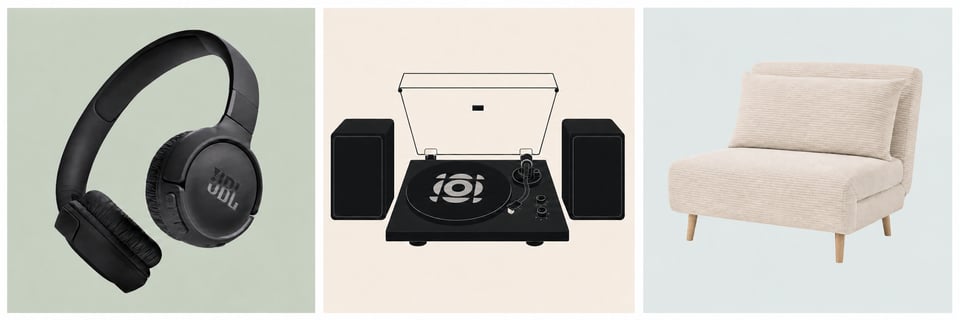
Get the look
The nine pieces worth having. We've done the searching so you don't have to.
Shop the Listening Room Edit →Why it works
A listening room works because it removes the decision. One chair, one lamp, your music. There is nowhere to scroll, nothing to tidy, nothing competing for attention. You sit down. You listen. The corner does the rest.
WHAT TO LEAVE OUT
A television in the sightline, which turns listening into watching. Speakers on the floor with things balanced on top. The big light left on. Hard surfaces and nothing soft to absorb them. Anything too precious to have a glass next to. And a side table you have to stand up to reach, which is the smallest failure on this list and the one you will notice every single evening.
LIKE THIS?
Get The Edit in your inbox
Questions
What is a listening room?
A space designed for sitting down and listening to music properly, rather than having it on in the background. It takes its cue from Japan's jazz kissa music cafés and the listening bars that followed.
How big does a listening room need to be?
It does not need to be a room at all. A corner with one good chair, somewhere to put a drink and speakers positioned properly is enough.
Where should speakers be positioned?
Form an equilateral triangle between the two speakers and the chair, and pull them away from the back wall. This single move does more than doubling your budget on equipment.
Do you need acoustic panels?
Not at home. A rug, curtains and one upholstered piece will absorb enough reflection for a domestic room. Acoustic panels are a studio solution to a studio problem.
What furniture works best?
A chair you would happily spend an evening in, a small side table within arm's reach, and low storage that holds the records and the turntable at seated height.
Can you create a listening room in a small space?
Yes. Small rooms are often better, because soft furnishings and close walls create the enveloping quality the look depends on.
What lighting works best?
One warm, dimmable pool of light beside the chair. Turn the ceiling light off entirely.