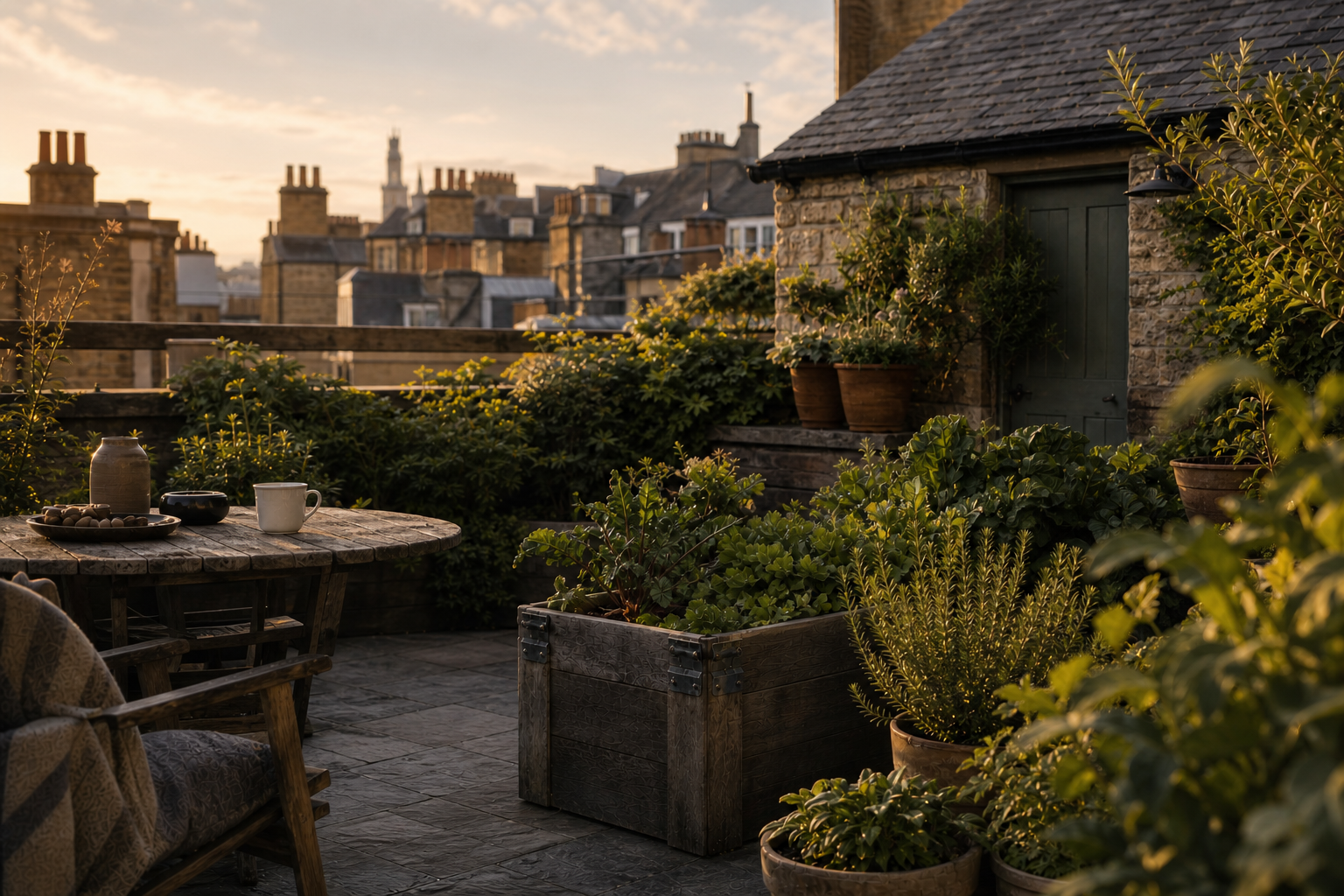
Tom and Barbara would approve of the hens. Margo would understand the Manhattan roof terrace.
SOMETHING TO PICK
Start with what you actually eat, and what your space can realistically grow.
MAKE USEFUL THINGS BEAUTIFUL
Buy useful things you’re happy to leave out.
LEAVE SOMEWHERE TO SIT
Don’t make the garden so productive that there’s nowhere left for lunch.
The idea
Liev Schreiber features in the October issue of AD, showcasing his family's beautiful NoHo rooftop garden with raspberry canes, wisteria and chickens. His wife Taylor wanted a little of her South Dakota farm upbringing in the middle of Manhattan. And, as celebrity homes go, it's considerably more personal and considered than another marble bathroom.
It made me think, rather fondly, of The Good Life. Tom and Barbara grew dinner. Margo and Jerry preferred to host it properly.
Looking at this rooftop, I wonder whether they’ve finally met in the middle.
Barbara’s principles. Margo’s budget.
Because a productive garden can also be a beautiful one. You can pick something for supper and sit down at a properly laid table to eat it. That is the version of self-sufficiency I’m interested in.
Something to pick. Somewhere lovely to sit. A garden that looks good through the kitchen window.
The hens can wait.
The details
01
Grow something for supper
Barbara would probably have had a planting plan capable of supporting the household. I’d start by looking at what you actually cook.
What do you keep buying, using half of and finding forlorn in the fridge? What would you enjoy stepping outside to pick? That’s your starting point.
A few herbs count. So does a planter with something edible growing in it. You don’t have to dig up the lawn to get the pleasure of bringing part of dinner in from outside.
Give the growing things a proper place. One generous pot can look more considered than a collection of little containers squeezed onto whatever surface remains. Use what you already have before buying the entire kitchen-garden department.
And choose something you want to eat. There is limited satisfaction in a bumper crop you spend the rest of the summer trying to give away.
Steal this
A generous terracotta pot or a simple trough, planted with something you reach for in the kitchen.
02
Make the useful things beautiful
This is where Margo might begin to take an interest.
The watering can is going to be left out. The trug will end up by the door. The tools will, at some point, be visible from the terrace. We might as well like looking at them.
There is plenty of beauty in things that work well: the shape of a watering can, a sturdy wooden handle, a basket that has earned its slightly battered appearance. They bring character without needing to be arranged into a scene.
But function comes first. A beautiful watering can that pours down your sleeve will lose its charm remarkably quickly. Choose things that feel good to use and will stand up to being used. Let the garden supply the weathering.
Steal this
A watering can that pours properly, a useful trug and a few good tools that you love to use.
03
Give the SPACE a frame
Growing things have very little respect for the rules. They lean, spread, climb and occasionally decide that the neighbouring plant’s space looks preferable. That’s part of the pleasure. A garden would be rather dull if everything stayed exactly where we put it.
A little structure gives all that activity somewhere to happen. A clearly edged bed. A substantial trough. A few pots repeated along a path. Keep the framework simple and the planting can be generous.
This is the useful meeting point between Barbara and Margo: plenty going on, with enough order to make it feel intentional.
The same thinking works in a small courtyard. You don’t need lots of different materials, multiple styles of planter and a separate feature in every corner. Let a few decisions hold the space together.
The parsley can misbehave. The whole garden needn’t join in.
Steal this
One well-proportioned raised bed, or a small group of pots with a material or colour in common.
04
PLANT where you’ll REACH it
There is a romantic version of growing your own that involves wandering down the garden with a basket. There is also Tuesday evening, when dinner is on and you need a handful of something quickly.
Plan for Tuesday.
Work with the light and space you have, and keep the herbs you use most close to the kitchen door if the light allows. Put the watering can somewhere accessible. Give the tools a home you can get to without moving four chairs.
A growing corner is much more likely to become part of daily life when looking after it feels straightforward. The same applies to a balcony or small terrace. Start with what comfortably fits and leave yourself room to move. Every inch doesn’t need to be productive. It's important to have a space to stand and enjoy your efforts, preferably with a cup of tea.
Steal this
An accessible planter, and a small shelf or storage spot for the things you use most.
05
Leave somewhere for lunch
Here is where I’m firmly with Margo. After the planting, watering and general negotiations with nature, I want somewhere comfortable to sit.
A chair that invites you to stay. A table with room for lunch. Somewhere to put down the basket and enjoy whatever you’ve managed to grow. This shouldn’t be the bit squeezed in at the end.
The pleasure of a productive garden includes being in it. Watching it change. Eating outside when the weather allows. Inviting someone round without first having to clear potting equipment off their seat.
Barbara can have the vegetable patch. Margo can come for lunch.
Steal this
A comfortable chair and a useful table. Somewhere lovely to enjoy your work.
And the chickens?
If fresh eggs are tempting, give the decision its own research, time and budget. In England and Wales, poultry keepers must register their birds with APHA; Scotland has its own kept-bird register. Check the current rules, your deeds or tenancy, and ideally your neighbours, before ordering the handsome chicken coop.
For the rest of us, there is no shame in buying the eggs.
The Good Life Edit
Pots worth leaving out. Tools worth using. Things to grow in. Somewhere to sit when you’re done.
Some links are affiliate links, including Amazon Associates links. I may earn a small commission at no extra cost to you.
What to leave out
The complete kitchen-garden starter kit before you’ve grown a single thing.
The tools too precious or too flimsy to do any work.
A collection of tiny pots that has quietly become another household to look after.
And the idea that enjoying any of this requires total self-sufficiency. You can grow the herbs and buy the bread. Pick something for the table and order the rest.
Some weeks, simply keeping everything alive will feel like quite enough.
Why it works
Barbara and Margo understood different pleasures. There is satisfaction in making something grow. There is also satisfaction in making somewhere lovely. Put the two together and you have an outdoor space that earns its keep and makes you want to spend time there.
That’s the part I’d borrow from the Schreiber family’s Manhattan rooftop. Something for supper. Somewhere for company. A little earth under the fingernails and a decent glass on the table.
The good life. With somewhere nice to sit.
Barbara or Margo?
Grow it yourself, or pour the wine while somebody else does?
Interiors, gardens, useful ideas and things I’d genuinely want at home. The Edit lands every other Thursday.
THE EDIT / EVERY OTHER THURSDAY
Questions
Can I keep chickens in my garden in the UK?
Usually, yes. In England and Wales every poultry keeper must register with the Animal and Plant Health Agency, however few birds they keep. Check your deeds or tenancy agreement first, and think about neighbours, foxes and who looks after them when you’re away.
What can I plant in a UK kitchen garden in autumn?
Autumn is a good time for garlic, overwintering onion sets and broad beans, with bare-root fruit such as raspberry canes coming into play once the dormant season arrives. Hardy herbs like rosemary, thyme and sage can go into pots now too.
What was The Good Life Series About?
A BBC sitcom first broadcast in 1975. Tom and Barbara Good, played by Richard Briers and Felicity Kendal, turn their Surbiton garden over to self-sufficiency, while their neighbours Margo and Jerry, played by Penelope Keith and Paul Eddington, look on.
How can I make a kitchen garden look good?
Give it structure. Use one clearly edged bed or a group of pots in a shared material, keep the tools you leave out worth looking at, and add somewhere to sit so it feels like part of the garden rather than a job.
What food Can I Grow on a balcony? What food can I grow on a balcony in the UK?
Herbs, salad leaves and compact fruit do well in containers. Check any weight limits or building rules first, choose pots with drainage, and put the plants you pick most often nearest the door.